Tuesday, October 11, 2016

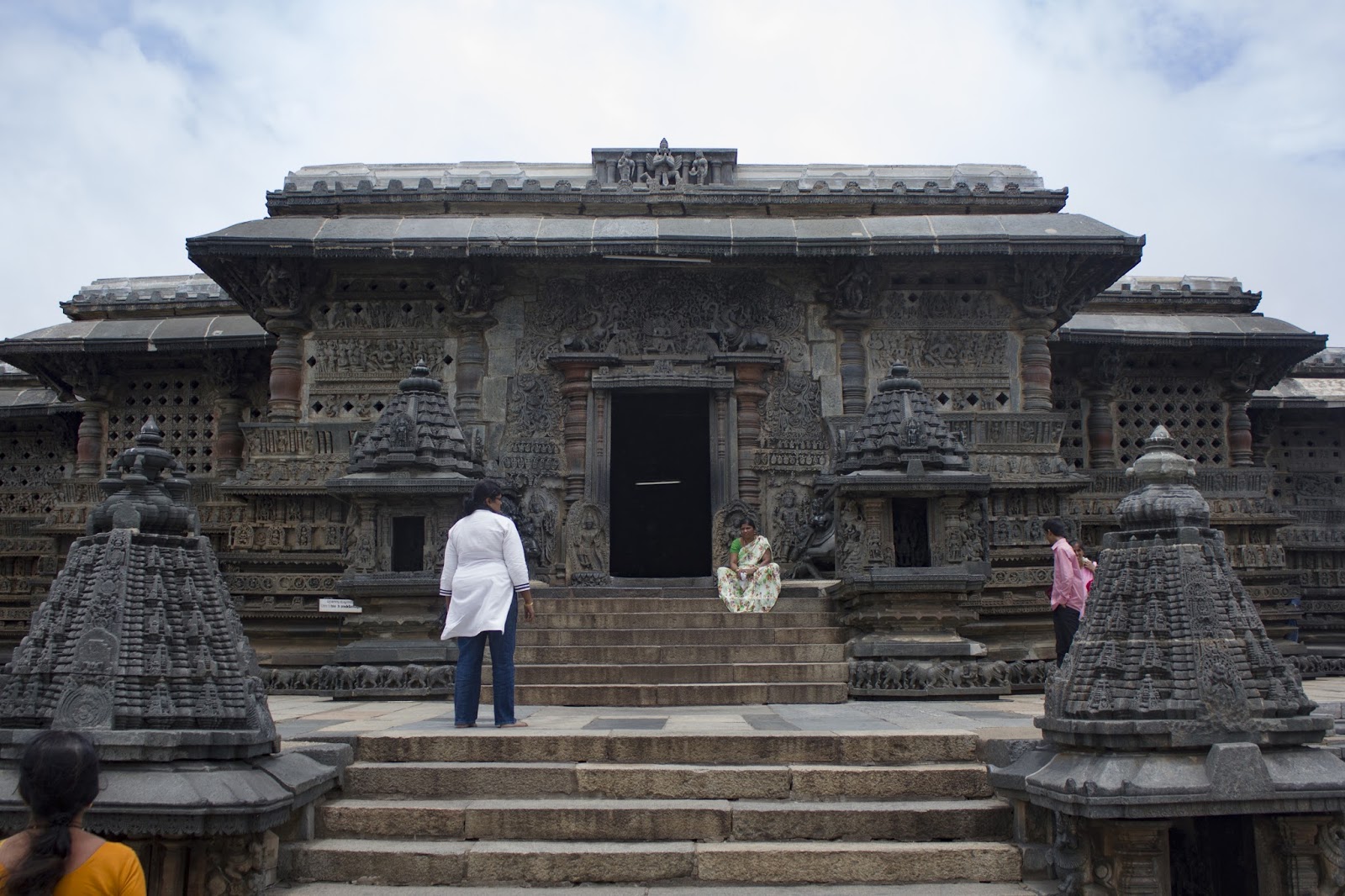
Channakeshava Temple - Belur


There are different kinds of holiday travellers. Ones who prefer a very leisurely holiday and the other is like me - who likes to visit the maximum number of places during the travel. Even during weekends my wife gets so irritated with my early rising ( normally earlier than the weekdays ). My logic has always been its during the weekends that I get to do things of my choice. Why reduce the available time sleeping. 

For such a person, a visit to Coorg with my parents was a test. It was a verrrrryyyy leisurely holiday with hardly anything to do except eat, sleep and loiter around the resort. We did go out but not the kind of trip I am used to. The trip to Coorg from Bangalore was a nightmare. It was a long holiday of 3 days ( I had taken 2 more days off and so it was a 5 day holiday ) and it was as though everybody had packed their bags and headed out somewhere. Mysore road was clogged with cars trying to get out of the city. It took us a good 8 hours to reach Coorg. 

This long journey to Coorg made us look for alternative routes for the travel back to Bangalore and I sensed an opportunity. Our original plan for this holiday was to go to Chikmagalur but the resort of my choice was already booked. So we shifted our plan to Coorg. However I had a full length plan for Chikmagalur and used this opportunity to cover a portion of that plan. 

People familiar with Karnataka route know that the Belur to Bangalore route is a dream. So what we did is to leave early after check out from Coorg and took a detour to Belur, have lunch at Hassan which is just 30 kms from Belur and proceed to Bangalore. It increased our travelling distance by about 75 kms but the route was far better and I get a chance to explore the place further. 

The route from our resort to Belur was a combination of well laid out highways and also little known routes through forest areas. The place was reasonably green but not the kind of lush surroundings that I have known Karnataka for during the rainy seasons. Dont wish to give a political flavor. We passed through the banks of cauvery several times during the trip. The levels of water are much lower compared to what I have seen earlier. And during the 4 days in Coorg, it would have rained may be for about an hour or two in total which is next to nothing. This year, Karnataka genuinely seems to be struggling with their water levels and in my personal view though I am from TN is that their concerns are justified. However the SC knows it better. This is just a layman's perpective. Back to my trip - the last 25 kms stretch was through absolute broken roads sandwiched on both sides by extremely thick plantations and the sun was playing hide and seek which made the place look magical. 

The destination which we were looking for was the famous Channa Keshava temple in Belur. The temple is an absolute architectural marvel in Hoysala Architecture built by King Vishnuvardhana. As your approach the place, you come across the huge Raja Gopuram and once you enter the temple you are greeted to the expanse of the temple with the main Channa Keshava temple right in the middle shining bright like the Sun in the solar system. 

The carvings in the temple say a thousand stories and its a virtual ready reckoner of most of the mythological stories which you have read during the childhood. It may make sense to have a guide with you to understand the nuances of the carvings better but we were short on time and hence decided to do the exploration ourselves. Few photos from the visit. 

From Belur we proceeded to Doddagadavalli Lakshmi Devi temple enroute to Hassan. More about that in my next blog. 


Saturday, October 8, 2016

Thoseghar water falls / Chalkewadi Wind mills / Urmodi Project


It was day 2 of our trip to Satara. We were well partially disappointed at having come to Kaas early by almost two weeks and flowering was only partial. So we wanted a good 2nd day to even things up. We vacated our hotel immediately after breakfast and our first stop was the Thoseghar waterfalls which was around 25 to 30 kms from Satara town.


The route passes through scenic valleys and you start seeing a number of wind Mills which grow larger with every passing minute. We had plans to visit chalkewadi wind mills after visiting Thoseghar as this place was further down the same road. Suddenly was in a state of doubt - which came first Thoseghar or Chalkewadi. We decided to stick to the original plan and my assessment based on the maps that the wind mill farm lay somewhere after Thoseghar.

The falls has a large parking area, good walkway to reach the falls and a platform from which the falls could be viewed.

As we approached the falls from the parking through a comfortable ten minute walk, the roar starts getting louder and louder. There is an exhilarating feeling on seeing a large waterfall gushing down a steep mountain and this falls did provide it. The water gushing down from over 200 ft was breathtaking to watch. We were here towards the fag end of the monsoon and the rains had abated over past few days but still the water flow was decent. Was just thinking what a sight it would have been during the monsoon.


The falls created a mist around the landing area and with the sun beating down it formed a colourful rainbow effect. We could see flocks of small birds flying closer to the ground near the waterfall. Tried my maximum to get a shot of them in flight with the waterfall in the background which proved difficult with my 70-200 mm lens and the rocky terrain which provided good camouflage for the birds. However just adjacent to the platform we had a group of monkeys in a branch swinging around for our attention and making all kinds of noices. My daughter is particularly terrified of them ever since a small monkey picked her packet of lays at Sanjay Gandhi national park and she now started kicking up a fuss about the monkeys.

With our photos done we left the place and moved to the next stop for the day - Chalkewadi wind mills.

A further two kms on the same road amid some breathtaking sceneries of lush greenery which presented a picture perfect view under a clear blue sky with a few white clouds interspersed along, is the Chalkewadi wind mills. The last few hundred metres is a treacherous drive for the car as roads are non existent and we clung on to our seats like the Fevicol ad with the bus.

It was extremely windy when we entered the place. Hold on. It's a wind mill farm. It's supposed to be windy around. We entered the place to a guard of honour from huge wind Mills on both sides spinning away merrily. There were hundreds of them. The idea of coming to this place was to educate my daughter on the wind Mills and how they help. With that done and more photos taken, we decided to return back.


On the way back we stopped near Sajjangad fort base. There is a spot from where you get breathtaking views of the urmodi dam project on one side and the valley offering views till Satara on the other. After a rest for sometime here we descended down towards Satara. 


There was one more stop for a photo upon seeing this large and imposing Pavanputra Hanuman standing in all glory as a guardian of the hills.


With that our musings with Satara ended and next pitstop was Wai on the way back to Mumbai for a second visit there post monsoons. That's in another blog.

Kaas - The valley of flowers


Kaas is an Unesco heritage situated about 25 kms from Satara town. This place was hardly known to the public and used to be frequented mostly by botanists and naturalists till 4-5 years back. Since then this place has become a hot spot for the public during a specific 3-4 weeks period towards the end of the monsoon when the landscape just bursts out in frustration out of a year of being tied down and treats people to a myriad of flowers with huge variety of colors,putting up a spectacular display.  It is Maharashtra's answer to Uttarakhand's valley of flowers with the exception that you dont need to break a sweat to get to Kaas.


Even during the monsoon, Kaas is extremely beautiful with mist kissing your faces through out the day. At Kaas, you are truly in the laps of nature - the air clean, the atmosphere surreal.  The place receives copious amounts of rainfall during the monsoons and in the other seasons the plateau is mostly barren.


Its critical that the visit to Kaas is timed properly. This was the 2nd year in planning for me. Ever since I read an article in National Geographic Magazine about Kaas, I had decided that this is one place I should not miss.


Last year we ill planned the trip and the blooming was over by the time we decided to travel. This year, with lot of meticulous planning, visited the place during the 2nd week of September and we were early this time around by 2 weeks atleast. The blooming was just peaking. So much for being a Chartered accountant and Analyst.


Getting to this place is easy as it is with most places these days with google maps being the ultimate solution provider for travellers like me. We reached the place without much fuss and the expanse of the plateau just takes your breath away.


As per the officials there, the plateau becomes home to 370 varieties of flowers and plant species during this 4 week period.


The rules for visiting this place are slightly different these days. There is a website available - www.kas.ind.in where you can register for your visit. During the peak season only 3000 persons are allowed to visit this place during a day. There are 3 hour time slots for each person starting from 7 AM onwards. I doubt if they follow it strictly but 3 hours is a fair enough time to explore unless you are a serious naturalist.


Vehicles can be driven right upto the entry point in the plateau. However there is a big but. The parking is quite some distance away - atleast a km or so. If you have a driver its best. If you are self driving then you can park it at the designated place from where the authorities have transportation arrangement to the plateau entrance.


Its quite well planned and staff are helpful. Just dont try and throw your weight around when they are implementing certain rules. Its for the benefit of the people and the natural beauty of the place. Also the signal at this place is quite weak and you may have a struggle in reaching the driver's cellphone as we found out. In that case, just take the official transport to the parking lot and get in or at the entrance there is a ticketing counter. You can reach there and inform the officials. They will contact the parking lot and ensure the vehicle reaches you.


These places are fantastic to teach your kids the beauty and importance of nature. They are going to the flag bearers for ensuring the beauty of these places are enjoyed responsibly. So do teach them about the same. The biggest worry for Kaas is the crowd. Till a few years back this obscure location was not a tourist spot. It was a naturalists paradise. Today it is one and only time will tell whether it comes out in one shape.


Do visit Kaas atleast once and if possible twice once during the monsoon before the blooms and again during the peak of flowering. It will be an unforgettable experience and will drench you in fond memories.


Other points that may help :
  • We travelled from Mumbai. Route was Mumbai - Pune - Satara - Kaas. Distance approx 300 kms.
  • Road condition good to excellent. Time taken was about 6 hours depending on the time you start and number of stoppages in between.
  • Can be done as a day trip as well especially from Pune. From Mumbai if you are a time bound traveller, you can. Best is to keep it a 2 day trip.
  • Place is good to go with family and small kids. Hand hold them at some of the slopes and slippery rocks.
  • No shops near to the plateau. So carry water bottles and snacks but please dont litter upon considering the delicate environment.
  • Ideal place to halt would be Satara. Quite a lot of options available. We stayed at Radhika Palace. Average place but in the heart of the town. Cost is slightly on the higher side for the facilities offered.
  • Other places nearby - Sajjangad fort, Kaas Lake, Thoseghar waterfalls, Chalkewadi wind mills, Bamnoli etc.

Tuesday, September 27, 2016

Fascinating temples around Kumbakonam

The name Kumbakonam for people from Tamilnadu evokes fond memories of the aromatic filter coffee, excellent mess food ( small eateries where food is almost like home made ) and above all fascinating temples stoked in history, stunning grandeur in architecture and the sheer size of some of these temples. Once I had attended a short MDP session in the IIM Ahmedabad. On the first day, one of the professors explained to us the rationale of the big walls of the IIM. He beautifully explained that the idea is to make yourself feel humble, show how small you are before the institution, to show that what you know is nothing compared to the enormous knowledge which you dont have and create an environment where you shed your ego and create an atmosphere where gaining knowledge becomes a priority. May be some of these temples in Kumbakonam also were done with a similar purpose. Not just Kumbakonam but temples across Tamilnadu mostly follow this pattern with each one engaging in a healthy beauty contest competition.

Temples across Tamilnadu are categorised into various sub groups like Padal petra sthalams ( 275 temples revered by the Saiva Nayanars and are among the greatest Shiva temples ), Divya desams ( 108 temples of Vishnu decorated by the Vaishnava Alwars ), Pancha bootha sthalangal ( representing the 5 main nature elements ), greatest living chola temples ( 3 of them comprising Brihadeeswarar, Darasuram and Gangai Konda cholapuram ), Arupadi veedu ( 6 important temples of Lord Karthikeya ) etc. These are just a portion of the total temples across the state.

Being from Chennai, I was always fascinated by the large temples around TN. Always make it a point to visit them whenever possible. My dad hails from Mayiladuthurai ( a short distance from Kumbakonam ) and these places always evokes fond memories for him.

This was my second visit to Kumbakonam where I stayed for 3 days at my usual abode - Rayas Grand ( good hotel in heart of the town, clean rooms and serves reasonable food ). The earlier visit was with my parents for visiting the Navagraha temples which are scattered around Kumbakonam. This time the visit was specific for visiting Vaitheeswaran Koil and the rest of the time available to visit the grand old temples around Kumbakonam including all 3 of the greatest living chola temples.

The rest of this blog is more of a photolog. In this case the pictures definitely do speak for themselves.


Built by Raja Raja Cholan , the Bruhadeeswarar temple also called as Periya Koil ( Big temple ) is a stunning architectural marvel. The main Vimana is over 60m tall, the temple has one of the largest shiva lingam and Nandi. The temple is over 1000 years old. The temple is the foremost of the 3 greatest living chola temples.


The quiet temple at Thiruvilanchuzhi is amidst beautiful surroundings. The place is famous for Swetha Vinayagar though the main deity is Shiva. The Ganesha here is said to be built with Ocean foam.


Built by Rajendra Cholan, the temple also called Bruhadeeswar temple is situated in Gangai Konda Cholapuram. The temple was built to celebrate the kings victory over the Pala dynasty. The name of the town literally means the land of the chola who conquered the Ganges. This is also one of the Greatest living Chola temples.


 Swamimalai Murugan temple


Main Gopuram of the Adi Kumbeswarar temple. Kumbakonam gets its name from this temple. The main gopuram is a huge structure.


Swamimalai temple steps leading to the main deity


Upppiliappan Temple


Sirkali Sattainathar temple. The temple has a very important place in history as its the place where Sambandar is said to have been fed milk by Parvati herself and he went on to become a great poet.


This temple at Thirubhuvanam was not originally in the list of places where we were to visit. However the driver on seeing our interest in chola architecture suggested this place. Its a massive temple with hardly any crowd. The temple for Lord Sarabeswara was constructed by the Cholas too.


Airavateeswara temple at Darasuram. 3rd of the greatest living chola temples. Some renovation work was going on when we visited this place.


Thiru Nageswaram temple. One of the Nava graha temples